

After evaluating leading air conditioner brands, we selected Carrier as our top pick for its energy efficiency, advanced technology, and overall performance. Ruud earned high marks for delivering reliable, energy-efficient cooling at a lower price than many premium competitors. Our guide compares the best air conditioner brands to help you find the right system for your comfort needs and budget. We also included shopping advice from This Old House plumbing and heating expert Richard Trethewey.
Key Takeaways
- Carrier is the best air conditioner brand because it offers the choice between a 10-year parts-only warranty or a 5-year parts/3-year labor warranty.
- Ruud ranks as the second choice on our list because of its straightforward product lineup and wide network of authorized dealers.
- The average cost of an air conditioner typically ranges from $5,008 to $28,509, depending on the brand and model.
Get Estimates from HVAC Experts in Your Area
Compare quotes from top-rated local pros


The 5 Best Air Conditioner Brands
We used our detailed review standards to create the following list of top air conditioner (AC) brands:
- Carrier: Best Performance
- Ruud: Best Mid-Tier Brand
- American Standard: Best Customer Service
- Goodman: Most Affordable
- Lennox: Best for Longevity
Compare the Top Air Conditioner Brands
The table below provides an overview of each air conditioner brand’s cost, warranty coverage, and other important factors.
| Provider | Our Rating | Price Range | Warranty | Better Business Bureau (BBB) Rating | |
|---|---|---|---|---|---|
$3,000–$15,000 | 5-year parts warranty (10 years with registration) | NR | |||
 | $3,500–$11,000 | 10-year compressor, 5-year unit and labor warranty | A- | ||
 | $3,500–$11,000 | 10-year compressor and 10-year parts warranty | A | ||
 | $3,000–$7,500 | 5-year parts warranty (10 years with registration) and lifetime compressor warranty with select models | A+ | ||
$4,000–$13,000 | 5-year parts warranty (10 years with registration) and 10-year compressor warranty | A+ |
Our Reviews of the Best Air Conditioner Brands
Below, we review the best air conditioner brands, outlining what each company does well, where they fall short, and how they compare in terms of warranties and top models.
Carrier

Pros and Cons
Pros
- Has more than 100 years in the heating, ventilation, and air conditioning (HVAC) business
- Offers innovative features like Greenspeed Intelligence for precise temperature control
- Features quieter operation compared to many competitors, especially in premium models
Cons
- Requires installation to be done by certified Carrier dealers, limiting contractor options
- Cost more than mid-range brands
Our Review and Insights
Carrier is our top air conditioner brand because of its attention to detail in engineering and efficiency. Its top-of-the-line Infinity series offers impressive Seasonal Energy Efficiency Ratio (SEER2) efficiency ratings up to 21, which can reduce cooling bills during sweltering summer months. Carrier’s Greenspeed Intelligence technology is another plus since it makes micro-adjustments to maintain comfort while using minimal energy. The brand’s units are quieter than some of the budget brands featured in our list.
However, a Carrier system might cost you more than comparable mid-range brands like Ruud, and you’ll need to work with a certified Carrier dealer for installation.
Recommended Model
The Carrier Infinity 21 (model 26VNA1) is the company’s standout air conditioning unit. This variable-speed model reaches up to 21 SEER2, making it an efficient residential air conditioner. What makes this model impressive is its Greenspeed Intelligence technology, which continuously adjusts output to improve efficiency, enhance humidity control, and deliver consistent comfort via a variable-speed compressor.
The combination of ultra-quiet operation, which goes as low as about 55 decibels, advanced humidity management, and durable WeatherArmor protection makes it a smart long-term investment—especially if you plan to stay in your home for more than 5 years.
Ruud
Pros and Cons
Pros
- Offers value with competitive pricing and performance
- Availability of parts and service technicians across most regions
- Features EcoNet smart technology in higher-end models for remote energy management
Cons
- Lacks some efficiency features found in premium brands like Lennox and Carrier
- Has slightly shorter warranty coverage
Our Review and Insights
Ruud is a reliable mid-tier brand that offers a balance between affordability and performance. What sets Ruud apart from budget competitors is its commitment to quality components and manufacturing standards that exceed minimum requirements. Its air conditioners incorporate solid technology that performs reliably season after season. Its mid- and higher-end units feature the EcoNet smart control system, which provides control and energy monitoring capabilities.
Ruud occupies a position between the premium innovation of Carrier and the budget-friendly focus of Goodman. Its units typically cost less than comparable models while providing similar reliability ratings. If you’re seeking dependable cooling without the investment in a premium brand, Ruud represents a good middle-ground option that prioritizes reliability over cutting-edge features.
Recommended Model
The Ruud Endeavor Ultra Series UA19 is a solid air conditioning unit that balances efficiency and value, boasting efficiency ratings up to 20 SEER2. It competes well with upper mid-range options offered by other brands while remaining more affordable. With its variable-speed compressor, the UA19 provides improved temperature consistency, humidity control, and energy savings. This is the only unit that features Ruud’s EcoNet smart control technology, allowing for remote monitoring and adjustments via smartphone when paired with the proper controls.
This model also has durable features like a composite base pan and a corrosion-resistant cabinet to ensure a long service life. Operating at moderate noise levels for residential use, the UA19 delivers relatively quiet performance for its class. In addition, Ruud backs the unit with a 10-year limited parts warranty and a conditional unit replacement when registered, making it a smart investment for quality cooling without a premium price tag.
American Standard
Pros and Cons
Pros
- Offers customer support with multiple contact channels, including a live chat feature for rapid troubleshooting
- Provides comprehensive, easy-to-understand owner resources
- Maintains an extensive nationwide dealer network with consistent installation and service quality standards
Cons
- Requires installation from certified dealers to maintain warranties
- Offers fewer smart home integration options in base models compared to other brands
Our Review and Insights
American Standard is our pick for homeowners who appreciate having multiple customer support options. Unlike brands that limit customer interactions to business hours or email-only communications, American Standard offers phone support, email assistance, detailed online resources, and a unique live chat feature. This innovative chat system connects homeowners with technical specialists who can troubleshoot problems in real-time, often helping resolve minor issues without the need for a service call.
However, American Standard has an upfront cost that exceeds the budget brands we’ve featured in this list. That said, the combination of reliable equipment and customer service often justifies the investment.
Recommended Model
The American Standard AccuComfort Platinum 20 stands out as the brand’s top air conditioning model, offering high performance paired with advanced comfort features. This variable-speed system reaches up to 24 SEER2 and continuously adjusts its output to maintain precise indoor temperatures while helping reduce overall energy use.
What sets this model apart is American Standard’s AccuComfort technology, which allows the system to fine-tune cooling output based on real-time conditions inside and outside your home. The Platinum 20 also operates at noise levels as low as 64 decibels, making it quieter than many comparable systems and well-suited for homes with patios, decks, or nearby outdoor living spaces.
Goodman
Pros and Cons
Pros
- Offers the most affordable pricing among major HVAC manufacturers we’ve reviewed, with units typically costing 20%–30% less than comparable mid-tier brands
- Provides straightforward designs that focus on core functionality without expensive add-ons
- Has AC units designed for multi-family housing units
Cons
- May have a shorter overall lifespan than premium brands like Carrier or Trane
- Lacks some of the advanced efficiency features and smart technology of higher-end competitors in most models
Our Review and Insights
Goodman has established itself as the go-to brand for budget-conscious homeowners looking for reliable cooling solutions. According to our recent cost data collection, Goodman consistently offers the most affordable options in every air conditioner category. The brand’s affordability is the result of its straightforward approach to manufacturing and design. Rather than incorporating expensive proprietary components or elaborate smart home features, Goodman focuses on producing simple, functional units with industry-standard parts. This approach also makes repairs more affordable, as replacement parts are widely available and familiar to most technicians.
Its affordability comes with some drawbacks. Most Goodman units don’t feature smart-home technology, and they lack the efficiency features of mid-tier and high-end brands. Still, Goodman is a solid choice if you don’t care for additional features and tech found in more expensive competitors.
Recommended Model
The Goodman GLXT7C is our pick for balancing affordability and efficiency. This split-system air conditioner delivers up to 17.2 SEER2, offering strong energy performance and smart technology integration while staying true to Goodman’s reputation for value pricing. While Goodman offers models with higher efficiency ratings, the GLXT7C remains one of the best overall values in the lineup for its combination of performance, cost, and technology.
The GLXT7C features a two-stage scroll compressor, which improves temperature consistency and efficiency by operating at a lower capacity during moderate cooling demands. It also includes its proprietary ComfortBridge Technology, which allows you to monitor temperatures and automatically make adjustments. The cabinet is made from galvanized steel with a powder-coat finish, providing reasonable durability for outdoor installation, even if it doesn’t match the heavier construction found in premium-brand systems.
Lennox

Pros and Cons
Pros
- Offers smart thermostat app for smartphone integration, zone control capabilities, and precise temperature management
- Features proprietary SilentComfort technology with noticeably quieter operation than many competing brands
- Uses strong materials like galvanized steel cabinets and specialized coil protection
Cons
- Typically comes with premium price tags
- Can be more expensive and time-consuming to repair due to proprietary parts and components
Our Review and Insights
Lennox’s top-tier central air conditioners, such as those in the Dave Lennox Signature Collection, boast some of the highest SEER ratings in the market, often exceeding 24 SEER2. This makes Lennox a standout choice for eco-conscious consumers looking to reduce their energy bills and environmental impact. Features like variable-speed compressors and precise temperature control systems contribute to enhanced comfort and efficiency. Lennox also integrates smart home compatibility, allowing you to control your HVAC systems remotely via the Lennox smart thermostat app.
However, this level of sophistication comes at a premium. Lennox air conditioners tend to be more expensive upfront compared to competitors like American Standard or Ruud. Additionally, the brand often requires proprietary parts and specific dealer maintenance, which can lead to higher long-term service costs.
Recommended Model
The Lennox SL25KCV is the brand’s most advanced and highly recommended air conditioning model, thanks to its exceptional energy efficiency and cutting-edge performance. This variable-capacity system reaches up to 26 SEER2, setting one of the highest efficiency benchmarks in the residential air conditioning market.
The unit’s variable-capacity compressor enables the system to precisely adjust cooling output, delivering consistent comfort while minimizing energy waste. The SL25KCV is also compatible with Lennox’s smart technology, enabling remote system control and monitoring via a smartphone app when paired with the appropriate thermostat. However, Lennox systems may require specialized replacement parts and service, which can increase long-term maintenance costs compared to more value-oriented brands.
How Do You Choose the Right Air Conditioner Brand?
Selecting the right air conditioner brand for your home involves considering a brand’s energy efficiency ratings, system reliability, total installation costs, and warranty terms, as these key factors will directly impact your daily comfort and long-term satisfaction. Let’s explore the most important elements to consider when making your decision.
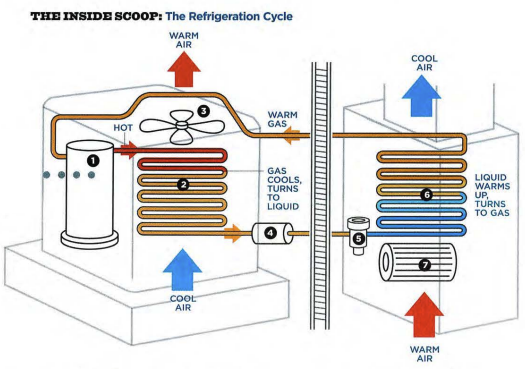
Energy Efficiency Ratings and Operating Costs
When we talk about air conditioner efficiency, we’re really talking about monthly energy bills and environmental impact. For many years, air conditioner efficiency was measured using a Seasonal Energy Efficiency Ratio or SEER rating. In 2023, the Department of Energy introduced SEER2 as a new efficiency standard that uses more realistic testing conditions to better reflect how air conditioners work in real homes.
As a general benchmark, upgrading from an older SEER system to a SEER2 equivalent unit can reduce cooling energy use by up to 20%, potentially adding up to hundreds of dollars in annual savings depending on your local climate and energy usage.
Long-Term Reliability and Maintenance
Even the best air conditioner brands require regular maintenance to operate efficiently and reach their expected lifespan. Routine upkeep, like changing air filters, checking refrigerant levels, and scheduling annual tune-ups, can improve system performance and help prevent expensive repairs.
Some air conditioner brands also make maintenance easier than others by offering stronger dealer networks, wider parts availability, and easier access to certified technicians. Choosing a brand with reliable local service support can reduce repair delays and lower long-term ownership costs.
Pro Tip
- A commonly overlooked maintenance item is keeping your air conditioner’s condenser coils free of dust, advised Richard Trethewey, the HVAC and Plumbing expert on This Old House. “Keeping condenser coils clean is an important part of maintaining HVAC efficiency, since built-up debris can restrict airflow and force systems to work harder than necessary,” he added. “Regularly cleaning the outdoor unit of dirt and debris can improve efficiency, reduce strain on the system, and extend its lifespan.”
Installation Costs and Service Support
Average air conditioner installation costs from $5,008 to $28,509, according to our research. What you pay depends on the brand and model you select, your location, and local labor rates. Expect to pay less for brands with fewer features, like Goodman and Ruud, compared to cutting-edge brands like Carrier or Lennox.
That said, the best HVAC equipment is only as good as its installation and ongoing maintenance. Leading brands maintain networks of certified dealers who undergo rigorous training specific to their products. This matters because proper installation can affect your system’s efficiency and significantly impact its lifespan. Look for brands that not only manufacture quality equipment but also invest in their dealer networks through continuous education and support programs.
Warranty Coverage and Parts Availability
A unit’s warranty coverage tells you a lot about the manufacturer’s confidence in its products. Most leading HVAC brands provide 10-year parts warranties for registered systems, with some offering limited lifetime compressor coverage.
Warranty terms can vary significantly depending on who installs your system and whether you register it on time. For example, some manufacturers, like Ruud, offer base warranties of 5 years that extend to 10 years with proper registration, while other brands might reduce coverage to just a few years without registration. Parts availability is equally important. Brands with strong dealer networks can reduce repair delays by ensuring better parts availability and faster service.
What Type of Air Conditioning System Should You Buy?
When deciding which air conditioner brand to buy, it’s important to consider your home’s layout and infrastructure, as they will determine the type of air conditioner you will need. It’s also helpful to understand the different types of compressor technology available. Air conditioners generally fall into three categories: single-stage, two-stage, and variable-speed systems, and the option you choose can affect your comfort, efficiency, and upfront costs.
Single-stage air conditioners operate at full power whenever they run, making them the most affordable option. However, they may produce less consistent temperatures and humidity control than more advanced systems.
Two-stage systems can run at both high and low settings, allowing them to operate more efficiently during milder weather. This can help improve indoor comfort, reduce temperature fluctuations, and lower energy usage.
Variable-speed air conditioners are the most advanced option. These systems continuously adjust output to match your home’s cooling needs, helping improve efficiency, humidity control, and noise levels. Brands like Carrier, Lennox, and Trane offer variable-speed models designed for maximum comfort and long-term energy savings.
A central air conditioner is a whole-home cooling system that uses a centralized unit to distribute cooling throughout a home. Central air conditioners work best for multi-room homes that already have existing ducting throughout the home.
A ductless mini-split air conditioner is a cooling system that controls the temperature of individual rooms or spaces in a home without the use of traditional ductwork. This system is best for homes that don’t have ductwork or if you want isolated temperature control for a single room or space.
Pro Tip
- When considering an air conditioning system, Trethewey recommends investing in one with a two-stage compressor, which works at full power only on the hottest days. The rest of the time, the air handler operates longer and squeezes more humidity out of indoor air. However, he cautions that the amount you invest should depend on how many days you’ll run it and your electricity costs: “You don’t want to spend thousands for a system that only saves you $100 a year.”
What Size Air Conditioner Do You Need for Your Home?
Figuring out the right size AC system for your home is a bit like finding the perfect pair of shoes. Too small, and the air conditioner won’t provide enough cooling. Too big, and you can waste money on unused energy. A common rule of thumb is that homes need around 20 British thermal units (BTUs) of cooling capacity per square foot of living space, though this figure is only a starting point and can vary based on several factors.
To put things into practical terms, a 2,000-square-foot home typically requires a 3.5–4 ton air conditioning system, or roughly 42,000–48,000 BTUs of cooling capacity. However, factors like your local climate, system insulation quality, ductwork, ceiling height, airflow, and the number of sun-facing windows can significantly change these needs. A well-insulated home in a moderate climate may require less cooling capacity, while a similar-sized home in a hot, humid region or one with high ceilings and large south-facing windows may need more.
Because of these variables, professional HVAC contractors rely on a Manual J load calculation, which accounts for your home’s specific characteristics to determine the proper system size. Getting this calculation right is critical. An oversized system can cycle on and off too frequently, causing uneven temperatures and excess humidity, while an undersized system may run constantly, struggle to keep up, and increase energy costs.
Pro Tip
- Trethewey advised that oversizing is the more common problem because contractors tend to jack up the tonnage in hopes of avoiding future complaints. “More is not better,” Richard warned. “Your house ends up feeling cold and clammy because the system cools down so quickly that the thermostat shuts off the air handler before it has a chance to fully circulate and dehumidify the inside air.”
Should You Repair or Replace Your Air Conditioner?
Whether you should repair or replace your air conditioner depends on the system’s age, maintenance history, the cost of a repair, and its overall performance. In general, you should consider replacement if your unit is more than 10–15 years old, requires frequent repairs, or struggles to keep your home comfortable.
Older systems with lower SEER ratings can also increase your monthly energy costs compared to newer high-efficiency models. Upgrading to a modern system with improved SEER2 ratings may reduce cooling energy use by up to 20%, depending on your climate and usage habits.
If a repair costs close to 50% of the price of a new system, many HVAC professionals recommend replacing the aging equipment rather than continuing to invest in it. However, homeowners may find newer systems with minor issues worth the cost of repairing, especially if they’re still under warranty.
Advice From a Homeowner
We spoke with over 20 customers and experts to gather insights on what homeowners should consider when hiring an air conditioner company. Walter Bennett, a homeowner and HVAC technician with Green Leaf Air, shared some of the experiences he has heard from homeowners.
One homeowner shared how the first company they contacted tried to overcharge by nearly $2,000 compared to the one they ultimately hired. Bennet shared that you should show caution when faced with high-pressure sales tactics and unnecessary upgrades, like claims that your entire ductwork needs replacing—even if it doesn’t. Always request a detailed, itemized estimate to avoid hidden fees and ensure transparency.
He mentioned that unexpected costs and permits are other areas to watch out for. For example, some homeowners may not realize that replacing an AC unit often requires a city permit, and not all contractors will handle this part of the process for you. Always confirm whether your project needs permits and who is responsible for obtaining them.
While DIY repairs might seem tempting to save money, HVAC systems are complex, and professionals can diagnose issues, like refrigerant leaks, that an untrained eye might miss. One homeowner appreciated their HVAC provider’s 10-year parts warranty and 1-year labor guarantee, while a friend who chose a cheaper, no-guarantee option faced repeated system breakdowns without recourse.
FAQs About the Best Air Conditioner Brands
How long should a quality air conditioner last?
A well-maintained air conditioner from a reputable brand typically lasts 15–20 years. Installation quality, regular maintenance, your climate, and how often the system runs all play a major role in determining lifespan. Systems in moderate climates with annual professional tune-ups often last longer, while units in hot or coastal regions may need replacement sooner.
What’s the difference between budget and premium AC brands?
The difference between budget and premium AC brands goes beyond the air conditioner price tag. Premium brands like Carrier, Lennox, and Trane typically offer quieter operation, more precise temperature control, and advanced features like variable-speed compressors and smart home integration. Budget brands have improved significantly and can provide reliable performance and solid warranties, making them a practical choice for homeowners focused on value.
Should I repair or replace my existing air conditioner?
The decision to repair or replace your existing air conditioner often comes down to what HVAC professionals call the “5,000 rule.” Multiply the age of your unit by the repair cost. If the result exceeds $5,000, replacement is usually the more cost-effective option. For example, if your 12-year-old AC needs a $500 repair, the calculation is 12 × $500 = $6,000, suggesting replacement might end up being the better choice.
How We Evaluated Air Conditioner Brands
We’re dedicated to providing thorough and impartial reviews. We accomplish this through transparent evaluations and data that support our ratings and recommendations.
Our Rating System
Our rating system for air conditioner brands operates on a 100-point scale, which is then converted to 5-star ratings, based on the following seven factors:
- System cost (20 points): We evaluate each brand’s average price range for a full-size air conditioning unit or furnace. If their average price falls under $11,000, we give them more points.
- Efficiency rating (20 points): We assess the company’s best energy efficiency ratings, specifically the highest seasonal energy efficiency ratio (SEER) and annual fuel utilization efficiency (AFUE). The higher these ratings, the better the score.
- Sound rating (10 points): We analyze the company’s lowest sound rating measured in decibels. Companies with quieter units receive higher scores.
- Warranty options (10 points): We give the most points to companies that offer warranties exceeding the average duration of five to 10 years. Points are deducted from companies with warranties that cover three or fewer parts.
- Energy Star certification (10 points): Companies with Energy Star-certified products receive additional points.
- Reputation (10 points): We review each company’s rating from the Better Business Bureau (BBB). Points are deducted for any alerts or pending lawsuits against the company.
- Customer service and resources (20 points): We consider the level of customer support and resources available, including user-friendly product search tools, FAQ sections, pricing guides, online manuals, and mobile apps.
To share feedback or ask a question about this article, send a note to our team at reviews@thisoldhousereviews.com.


